Victor Serge is one of the great men of the 20th century - and one of its great writers too. He was an anarchist, an agitator, a revolutionary, an exile, a historian of his times, as well as a brilliant novelist, and in Memoirs of a Revolutionary he devotes all his passion and genius to describing this extraordinary -and exemplary- career. Serge tells of his upbringing among exiles and conspirators, of his involvement with the notorious Bonnot Gang and his years in prison, of his role in the Russian Revolution, and of the Revolution’s collapse into despotism and terror. Expelled from the Soviet Union, Serge went to Paris, where he evaded the KGB and the Nazis before fleeing to Mexico. Memoirs of a Revolutionary recounts a thrilling life on the front lines of history and includes vivid portraits not only of Trotsky, Lenin, and Stalin but of countless other figures who struggled to remake the world.
Peter Sedgwick’s fine translation of Memoirs of a Revolutionary was abridged when first published in 1963. This is the first edition in English to present the entirety of Serge’s book.
More on Victor Serge (1890–1947): He was born Victor Lvovich Kibalchich to Russian anti-Tsarist exiles, impoverished intellectuals living “by chance” in Brussels. A precocious anarchist firebrand, young Victor was sentenced to five years in a French penitentiary in 1912. Expelled to Spain in 1917, he participated in an anarcho-syndicalist uprising before leaving to join the Revolution in Russia. Detained for more than a year in a French concentration camp, Serge arrived in St. Petersburg early in 1919 and joined the Bolsheviks, serving in the press services of the Communist International. An outspoken critic of Stalin, Serge was expelled from the Party and arrested in 1929. Nonetheless, he managed to complete three novels (Men in Prison, Birth of Our Power, and Conquered City) and a history (Year One of the Russian Revolution), published in Paris. Arrested again in Russia and deported to Central Asia in 1933, he was allowed to leave the USSR in 1936 after international protests by militants and prominent writers like André Gide and Romain Rolland. Using his insider’s knowledge, Serge published a stream of impassioned, documented exposés of Stalin’s Moscow show trials and of machinations in Spain, which went largely unheeded. Stateless, penniless, hounded by Stalinist agents, Serge lived in precarious exile in Brussels, Paris, Vichy France, and Mexico City, where he died in 1947. His classic Memoirs of a Revolutionary and his great last novels, Unforgiving Years and The Case of Comrade Tulayev (both available as NYRB Classics), were written “for the desk drawer” and published posthumously.
http://www.nybooks.com/books/imprints/classics/memoirs-of-a-revolutionary/
Showing posts with label Russia. Show all posts
Showing posts with label Russia. Show all posts
Sunday, 22 April 2012

Wednesday, 29 February 2012
How Gogol* Explains the Post-Soviet World (*And Chekhov and Dostoyevsky.) The case for (re)reading Russia's greatest literary classics.
BY THOMAS DE WAAL
Twenty years ago, 15 new states emerged from the wreck of the Soviet Union, uneven shards from a broken monolith. One story turned into 15. Most Soviet watchers have been struggling to keep up ever since. How to tell these multiple stories? In retrospect, it is evident that Western commentators failed to predict or explain what has happened to these countries: their lurches from one crisis to another, weird hybrid political systems, unstable stability.
Commentators have long tried to project models from the rest of the world ("transition to a market economy," "evolution of a party system") onto countries that have very different histories and cultural assumptions from the West and often from each other. I have read about Russian Prime Minister Vladimir Putin's "ethnocentric patriotism," his "delegative democracy trap," and his building of a "neo-patrimonial state" -- all very intelligent stuff. What I take away from such jargon is a nicely constructed model or two (for both Putin and the political scientists), but not the insights I seek into a living society.
So here is a not entirely frivolous suggestion: How about skipping the political science textbooks when it comes to trying to understand the former Soviet Union and instead opening up the pages of Nikolai Gogol, Anton Chekhov, and Fyodor Dostoyevsky?
This is not just a thought experiment; the works these authors wrote in the 19th and early 20th centuries turn out to be surprisingly applicable to today's politics in a broad swath of the former Soviet space, whether it's the unexpected fragility of Putin's authoritarian rule in Russia or the perpetually failed efforts to modernize next-door Ukraine. There's a reason: Most of the former Soviet countries emerged from two centuries of Russian-dominated autocracy, an autocracy that just happened to have produced some of the greatest literature the world has ever seen. Some have argued that the one helped produce the other, that the rigors of tsarist-era censorship, the aridity of public service, and the educated classes' hunger for intellectual nourishment all helped stimulate great writing. Pushkin and Tolstoy, Gogol, Chekhov, and Dostoyevsky were more than just cultural commentators -- they were public celebrities and the key moral and intellectual voices of their age. They were idolized because they described the predicament readers found themselves in - and still do.
In her surprising 2010 bestseller, The Possessed, Elif Batuman makes the case for why Russian literature can be a guide to most of life's questions, big and small. "Tatyana and Onegin, Anna and Vronsky," she writes, recalling some of the Russian canon's most famous characters, "at every step, the riddle of human behavior and the nature of love appeared bound up with Russian."
My idea here is a little more modest: a brief sketch of how three great works of Russian literature can be mapped onto the stories of the three post-Soviet countries in which Western commentators take the keenest interest: Russia, Ukraine, and Georgia. These classics, each more than a century old, provide both the specific detail and the grand panorama that are lacking in a shelf full of overmodeled political analysis.
Russia as Nikolai Gogol's The Government Inspector
A great burden of Russia is that it has never rid itself of the habit of feudalism, of personalized power. Up until the late 19th century, enslaved serfs constituted a majority of the Russian population. Nor were the landowners who ruled the serfs independent -- they served the state and owned property at the mercy of the tsar. The Soviet system reconstituted that hierarchy, this time with centralized ownership of property and the monopoly of the Communist Party. In recent years, Putin has repackaged it yet again for the post-Soviet era, imposing a so-called "power vertical" even while allowing his citizens a much greater degree of private space.
But, as Putin has recently discovered, the system is surprisingly brittle...
Thursday, 16 February 2012
Vladimir Putin: his place in history
Vladimir Putin - There had been times — and to some extent this is still the case today — when Putin was showered with accolades that were not always fully justified. And the time is not far off, when public opinion will regard him as an outcast. However, the role he played in Russian history has to be assessed in terms of specific historical events. When he rose to power he faced very specific historical tasks, and he completed them more or less successfully. He can’t be expected to deliver what he is not, by definition, capable of delivering. He was not the organising force of Russia’s new statehood. Russia today faces different challenges and Putin will be forced to retreat from the political stage. We ought to accept this fact calmly.
Calm acceptance — it is hard to think of a less apposite idea these days. What I am going to say is not likely to please either Putin’s supporters or his opponents. It might seem quite strange to be contemplating the departure from politics of a man who seems intent on establishing himself in politics forever. But I’m not claiming that Putin will leave tomorrow, just as the democracy movement didn’t suddenly dissolve into thin air in 1992. It’s just that a few years mean a long time for an individual but they mean nothing in terms of history. What matters is not the number of years but the trend.
In the course of just over ten years we have witnessed the rise and fall of Putin’s popularity, we have seen the splendour and misery of his policies. It would be unfair to judge him exclusively by today’s standards. But it would be just as strange to assess his present-day political role on the basis of his achievements of yesterday...
Sunday, 12 February 2012
Women on the left: Alexandra Kollontai
The life and legacy of Bolshevik Revolutionary and feminist Alexandra Kollontai:
Kollontai was born in 1872 into a privileged although fairly liberal background, her father a Tsarist general and her mother’s family wealthy timber merchants. She first began to oppose the restricted position of women in the Russian empire of the time by arguing against her mother as a teenager for her need of an education. She won the battle of wills, being allowed to undertake a certificate of teacher training. In 1893 she married for love, but she would later admit this was also a protest against her family who opposed the match.
Initially Kollontai became aware of politics through contact with radical liberals, impressed by their statement of belief in the emancipation of women through education. However, during the women’s textile workers strikes of 1896 upon accompanying her husband on an inspection of a large textile factory, she was shocked to discover the body of a young boy and was appalled at the conditions of ordinary women workers. Kollontai became convinced of the need to overthrow capitalism and that the subjugation of women was tied not just to their subjugation to men, but ultimately to the capitalist mode of production.
As time passed Kollontai felt more and more trapped by her marriage, which left her little freedom to pursue her own interests. She increasingly spoke of the capture of women in domestic subjugation. In 1898 she left her husband to study political economy in Zurich. During this trip she undertook an in-depth study of the works of Marx and Lenin as well as those of Luxemburg and Kautsky. Before returning to Russia in 1899 she visited London and was introduced to Sidney and Beatrice Webb, but rejected their reformist ideas.
Following her return to Russia, Kollontai joined the Russian Social Democratic Labour Party (RSDLP) and became an important revolutionary agitator and writer. She was neutral through the 1903 split into the Bolsheviks and Mensheviks although from 1904 she officially joined and worked for the Bolsheviks. She would subsequently leave again in 1908 due to the Bolshevik refusal to take part in the Duma, which she argued was undemocratic but a potential platform for left agitation. She participated in the 1905 workers procession to the Winter Palace which ended in the Bloody Sunday Massacre and was prominent throughout the 1905 revolution agitating and arguing alongside Trotsky for a positive attitude towards the emerging Soviets which she regarded as the bud of a true workers democracy.
Although history has remembered her primarily for her work on the women’s question, at this time she was a widely regarded political economist and expert on the Finnish question. In 1906, under a wave of Tsarist repression, Kollontai published a collection of articles on Finland and Socialism for which she was accused of calling on armed insurrection against the state and fled to Germany to avoid arrest.
It was during this period that Kollontai first began to systematically develop her understanding of the women question, in particular in her 1909 work ‘The social basis of the Woman question’. Along with other women she felt that the issue was denigrated by many on the left and seen as secondary to the ‘real’ class struggle or even dismissed as a bourgeois deflection. She agreed with the Marxist argument that women would not be emancipated solely by the legal and political equality demanded by the mainstream women’s movement. However, equally she argued that a revolutionary party must organise and relate to the particular needs of women as part of the working class and that this must be central to the work of all revolutionaries...
Sunday, 5 February 2012
Mother’s boys: conversations with the parents of Russia’s neo-Nazis
Russia’s growing nationalist movement has alarmed many liberal commentators, who wonder how the country that defeated Adolf Hitler could have given birth to so many young men overtly sympathetic to his ideas. Journalist Olesya Gerasimenko, who has covered several neo-Nazi trials, wondered where the defendants came from: how Russian boys could go out and kill foreigners in cold blood. She persuaded three of the convicted murderers’ parents to talk to her...
The arrest wasn’t unexpected: we’d already had a similar experience with him. We have Cossack ancestry, and Don Cossacks always fought with Turks – and the first case we had was precisely with a Turk. That struck me. Then he had to be bought out of trouble – well, not exactly bought out, but this case had to be covered up by any means possible. It was a murder: there were three of them, two survived, one died. From that moment on Vasily’s views became clear. I understood that I wouldn’t change him. We didn’t row, no, that would have driven my son away from me. You must always protect your relationship with your child. I needed not to lose him. After the incident with the Turk I said: ‘Vas, first pay off the debt – we are in debt – I can’t do this myself, you help me. Study and work for now’. I thought I’d found a brilliant solution. For some time at least I could hold on to him. Later he came to me himself and said: ‘Mum, I’ve come to the conclusion that it’s time to take action’. I looked sadly at him and remained silent. And what could I say?
The arrest wasn’t unexpected: we’d already had a similar experience with him. We have Cossack ancestry, and Don Cossacks always fought with Turks – and the first case we had was precisely with a Turk. That struck me. Then he had to be bought out of trouble – well, not exactly bought out, but this case had to be covered up by any means possible. It was a murder: there were three of them, two survived, one died. From that moment on Vasily’s views became clear. I understood that I wouldn’t change him. We didn’t row, no, that would have driven my son away from me. You must always protect your relationship with your child. I needed not to lose him. After the incident with the Turk I said: ‘Vas, first pay off the debt – we are in debt – I can’t do this myself, you help me. Study and work for now’. I thought I’d found a brilliant solution. For some time at least I could hold on to him. Later he came to me himself and said: ‘Mum, I’ve come to the conclusion that it’s time to take action’. I looked sadly at him and remained silent. And what could I say?
Confrontation has increased: the town is full of foreigners from other races with completely different mentalities, with whom we do not want to live. As a result white parents will now go anywhere, even to the outskirts of Moscow, just so to make sure there are only children like theirs in the classroom. Well, this is now happening all over the world..
Saturday, 17 December 2011
Spies and Commissars: Bolshevik Russia and the West by Robert Service – review
In our age of many so-called "revolutions", it is good to be reminded what a real revolution tastes like: not simply the removal of a ruler but the complete overthrow of the social, economic and political structures.Robert Service's new book revels in the sheer exuberance of the first months of Russia's 1917 upheavals, with the new leaders "cheerfully smashing institutions to smithereens". As he makes clear, these Bolsheviks were committed to the overwhelming use of force and terror in achieving their revolutionary ends. In this context, the idea of "democratic revolutions" such as those in Egypt or Tunisia seems like a contradiction in terms.
http://www.guardian.co.uk/books/2011/dec/18/spies-commissars-robert-service-review
As befits the serial biographer of Lenin, Trotsky and Stalin, Service is well primed to draw sharp portraits of the leading actors. The picture of a grumpy Lenin writing his April Theses on the infamous sealed train, which the Germans permitted to cross their territory, will long live in the mind. Humourless to a fault, Lenin not only banned smoking on the train but also introduced a ticketing system for the overused toilets. If only the Russian proletariat had known what it was in for.
In those early years, both the Bolsheviks and the western powers were desperately trying to understand what had happened in Petrograd in 1917 and what it meant for the rest of the world. Lenin and Trotsky seized power convinced that they were merely the vanguard and, even if they were crushed, Russia's revolution would have provided the spark for Europe to follow. By the early 1920s, they saw that Marx had got that bit of futurology wrong. After the first chaotic flush, they began the dual strategy of seducing the captains of western industry while attempting to undermine them.
There is a lovely moment when a serious diplomatic mission arrived in Berlin for peace talks with the German government, only for a crate they brought in their diplomatic luggage to break open on the railway platform, spilling out "insurrectionary propaganda". While it was dispiriting to watch as uprisings in Berlin and Budapest and Munich guttered into nothing, the failures also gave the new leaders the sense that they had the right to control and patronise their brothers and sisters elsewhere. Though even Lenin had to admit, when the Red Army was defeated in Poland, that the workers had joined "a Polish patriotic upsurge" rather than the international revolution.
http://www.guardian.co.uk/books/2011/dec/18/spies-commissars-robert-service-review
Friday, 16 December 2011
Labor Discipline and the Decline of the Soviet System
The issue of labor discipline lay at the very heart of the antagonistic relationship between the Soviet elite and its work force. That "discipline" was slack in Soviet factories has long been noted by Western and Soviet commentators alike: high labor turnover; absenteeism, closely tied to heavy drinking on and off the job; and, more importantly, a highly irregular pace of work, with periods of intensive labor (usually involving forced overtime) interspersed with countless opportunities for time wasting, slow work, and a general disregard for production quality.
The historical genesis of this system of work is complex, and beyond the scope of this article, but one factor in particular deserves special stress. In order to consolidate its rule, the emerging Stalinist elite had to break down actual and potential opposition emanating from virtually the entire society: the peasants who resisted forced collectivization, and the industrial workers (largely drawn from that same peasantry), the majority of whom resented and to a certain extent resisted the hardships and pressures of industrialization. This required an atomization of the population, in particular the working class—not perhaps a total destruction of mutual solidarity, but the elimination of its ability to function collectively as a class, and the erosion of its consciousness of itself as a class. At the same time, the bureaucratic, almost cavalier planlessness of the Five Year Plans created a deep labor shortage. For the regime this was to prove a fatal combination: a depoliticized, but alienated and bitter work force which, because labor power was desperately scarce, could neither be induced nor compelled to work efficiently.
The result was that workers became a central—but by no means exclusive—cause of the long-term trend toward chronic inefficiency and economic decline which plagued the Soviet system. Workers, while politically powerless to alter the system, compromised the elite's ability to extract and dispose of the surplus product. They thereby became a prime cause of its instability. Virtually every phase of Soviet history therefore witnessed a concerted struggle by the elite to find ways to improve labor performance. Under Stalin, the emphasis was on naked coercion; to the extent that such measures proved unsuccessful, the economic losses this entailed were compensated by the existence of a massive slave-labor sector.
The failure of the Stalinist strategy produced two major periods of attempted reform, under Khrushchev and Gorbachev, which sought to solve the problems of poor motivation and effort by combining the incentives of political liberalization with the economic sanctions of tighter wage policies and, under Gorbachev, the threat of unemployment. As we now know, these efforts also failed to produce the desired results because the reforms could not go beyond the intrinsic limits of the system. No reform could challenge the basic power relations on which the elite's continued rule rested. Thus the fundamental antagonisms which destabilized production remained unresolved, and the system continued on its path of irreversible decline...
Stalinist industrialization had given rise to a specific labor relationship in which workers were rendered unable to confront the ruling elite or even industrial management as a collective entity in their pursuit of either economic or larger political goals. The bureaucratic and planless nature of the system, however, with its absence of systematic economic regulation, allowed workers to assert negative sanctions directly at the point of production. This was not "resistance," but individualized defensive action by an essentially atomized and depoliticized work force. Workers became a source of the system's long-term tendency toward economic decline, a fact explicitly recognized by both Khrushchev and Gorbachev when providing the rationale for their respective reform programs. Unless workers could be made once again to identify with the system and emerge from their demoralization, no moves toward greater economic efficiency would be possible. Insofar as the elite's privileges depended on such an economic rationalization, its own existence was therefore placed in jeopardy. It is for this reason that the Stalinist system could not be termed a "mode of production." It operated at such a high level of internal contradiction and instability that it could never be more than a historically transient social formation.
Effectively, the political relationships which kept the elite in power produced a network of social relations within production which led to the system's ultimate decline. This is significant. The system deteriorated but it was not overthrown. Stalinism's legacy was to make the reconstitution of the Soviet working class as a class (able to articulate and pursue its own radical needs) a lengthy and very difficult process. Some rudimentary beginnings were observable during perestroika, but they will take a long time to mature, perhaps several generations. In the meantime, the prospects for post-Soviet capitalism are for a stagnant, corruption-driven system, with no dynamic for development. If the alternatives are not quite socialism or barbarism, perhaps they are, at the very best, socialism or chaos.
Thursday, 15 December 2011
'I am Putin's propaganda'
There are certain subjects we steer clear of completely. We can’t touch anything connected with Chechnya, or controversial stories about Rosmolodyozh (the Federal Youth Agency - trans) and its head Vasily Yakemenko. And of course any minister can phone Putin and a story will be dropped immediately.
This is normal practice, and there is nothing you can do about it. You can just close your programme down, like Andrey Kolesnikov recently did. But Kolesnikov is also a reporter for Kommersant, and the editor in chief of Russky Pioneer magazine. Whereas I have no other work. We are in a rather unhealthy situation, where there is no real media industry, and anyone can be thrown out of a job at any moment and banned from following their profession. Parfyonov [Leonid Parfyonov, an outspoken journalist whose current affairs programme on NTV was closed down by the government in 2004] is one example of this. So self censorship is the order of the day. Everyone is afraid of something.
In this situation all you can do is get on with your job: to entertain and inform the public. It is difficult to identify with the people who watch TV, but in Russia they are in the majority. Only 19 million households have broadband internet access, which means the rest rely on television for their information. All you can do is try to tell them about what is happening, but as obliquely as possible. You have to resort to the language of Aesop. What you can’t say directly, you have to say not even between the lines, but through an extra layer of parable.
These are guerrilla tactics. The paradox is that the better you do your work, the more risky it becomes. I work on the ‘do what you can and hang the consequences’ principle. We are not required to call black white, but we can be fired if we call it black. The most seditious thing you can do on TV today is to describe what is actually happening in plain Russian. And this is what we try to do. You can vote with your feet, like Kolesnikov, but then you will be doing nothing at all...
Saturday, 10 December 2011
Russia's stunning protests end with hint of change
The most dramatic of Saturday's protests saw a vast crowd jam an expansive Moscow square and adjacent streets, packed so tight that some demonstrators stood on others' toes. Although police estimated the crowd at 30,000, aerial photographs suggested far more, and protest organizers made claims ranging from 40,000 to 100,000 or more.
Elsewhere in Russia, some 7,000 protesters assembled in St. Petersburg, and demonstrations ranging from a few hundred people to a thousand took place in more than 60 other cities. Police reported only about 100 arrests nationwide, a notably low number for a force that characteristically quick and harsh action against opposition gatherings.
The police restraint was one of several signs that conditions may be easing for the beleaguered opposition, at least in the short term. Although city authorities generally refuse opposition forces permission to rally or limit the gatherings to small attendance, most the protests Saturday were sanctioned. In a surprise move, Moscow gave permission for up to 30,000 people to rally and police took no action when the crowd appeared to far exceed that. Just as striking, police allowed a separate unauthorized protest to take place in Revolution Square.
State-controlled television, which generally ignores or disparages opposition groups, broadcast footage not only of the Moscow protest — which was so big it would have been hard not to report — but in several other cities as well.
Wednesday, 7 December 2011
Gorbachev calls for Russian elections to be declared void
Russian authorities should annul the parliamentary vote results and hold a new election, the ex-Soviet leader Mikhail Gorbachev has urged, as popular indignation grows over alleged election fraud.
Thousands of Russians have rallied in Moscow and St Petersburg in the past two days, facing off against tens of thousands of police and interior ministry troops. Hundreds of protesters have been detained in both cities. Gorbachev told the Interfax news agency that authorities must hold a fresh election or deal with a rising tide of discontent.
Vladimir Putin's United Russia party won less than 50% of Sunday's vote, a steep fall from its earlier two-thirds majority, according to preliminary results. But opposition parties and international observers said the vote was marred by vote-rigging, including alleged ballot-box stuffing and false voter rolls.
"More and more people are starting to believe that the election results are not fair," he told Interfax. "I believe that ignoring public opinion discredits the authorities and destabilises the situation." Gorbachev added that authorities "must admit that there have been numerous falsifications and ballot stuffing".
Sunday's parliamentary vote suggested Russians are tiring of Putin and his United Russia party, which has dominated all other political forces in the country for a dozen years and earned a reputation for corruption.
Putin, meanwhile, officially registered on Wednesday to run for the presidency in March, but the unusually sustained protests of the past two days suggested his drive to retake the job he held from 2000-2008 may not go as smoothly as he had expected. More opposition rallies were expected, along with another new pro-Putin gathering in central Moscow.
The beginning of the end for Putin?
The preliminary results from Russia's parliamentary elections are bad news for the Kremlin. Putin's pet party, United Russia, got slightly less than 50% and it lost its constitutional majority in the Duma. That translates into a 14% fall from the last elections in 2007 for a party that had never seen its share of the vote decline at federal elections. The question now asked is a simple one: is this just a temporary setback or the beginning of the end for Edinaya Rossia and the Putin consensus?
By the standards of Western democracies, falling just short of the 50% mark after three years of global economic crisis and 12 years in power would be a stellar victory. But in Putin's Russia this is a serious setback for two main reasons. First of all, the elections were neither free, nor fair. Evidence of ballot stuffing is already swirling around the internet, and the election campaign was heavily biased in favour of United Russia. Federal TV channels and local authorities worked hard to persuade and pressurise people to vote for United Russia. Under normal campaign circumstances and with no ballot stuffing Putin's party would perhaps have got somewhere closer to 30-35% of the vote. The authorities know that. This is hardly a rock-solid foundation for the supposedly Teflon President Putin who wants to be a fatherly leader of the nation for a life-time. His lifetime.
Secondly, all authoritarian regimes thrive on the political apathy of the governed. Ruling a politically apathetic population is cheaper, as elites need fewer resources for either coercion or co-optation, while having more time to enjoy on the benefits of power. Throughout the last decade, from the average voters' perspective the question was why bother voting when life standards were rising, Putin was cool and the election results were always going to be another Olympic-size victory for United Russia.
But instead of apathy, in the run up to these elections the Russian intelligentsia was at boiling point. Political activism (mainly online) among the young and urban middle classes was at its highest. Among the glamorous 'crème de la crème' of Russian society - pop singers, ballerinas and TV stars - supporting Putin (and especially United Russia) became markedly uncool. In the absence of access to TV or wider platforms for discussion, Russia's oversized blogosphere hotly debated whether to boycott the elections (the argument of the 'Nah-Nah' campaigners - one could translate this as 'fuc-fuc', a short form of 'f..k off'), or go out and vote for any party except United Russia. True, this was a bit of a storm in a teacup. But nonetheless the spilt water also leaves traces outside the cup, consolidating the trend of rising anti-government feeling among the growing middle-class (even including the half of it that is employed by the state). This trend is not so much fuelled by a hope of change, but by the desire to punch United Russia in the nose. That too suggests a change in attitudes.
http://www.opendemocracy.net/od-russia/nicu-popescu/beginning-of-end-for-putin
Tuesday, 6 December 2011
Russian election: police, troops and youth groups stifle anti-Putin protests
The Kremlin mobilised thousands of police, interior troops and pro-government youth groups on Tuesday night to crack down on protests against the rule of Vladimir Putin after elections that saw his party returned to power with a greatly reduced majority.
Riot police, clad in camouflage and black crash helmets, arrested around 250 people who had gathered at Moscow's Triumphal Square in an attempt to build a wave of demonstrations following Sunday's disputed parliamentary election, in which support for Putin's United Russia party fell below 50%.
But the protesters were vastly outnumbered by pro-Kremlin youth activists, who converged on the square waving huge Russian flags and shouting "Medvedev, victory!" and "Putin, Russia!".
It was the first time the youth group Nashi had been deployed for the purpose it was created – to put down pro-democracy protests similar to those that successfully swept post-Soviet Ukraine and Georgia in 2004 and 2005.
Boris Nemtsov, a veteran liberal opposition leader and former deputy prime minister, was among those arrested in Moscow on Tuesday. A further 150 people were reportedly arrested during a similar protest in St Petersburg.
Monday, 5 December 2011
Russia election: Hundreds rally against Putin in Moscow
United Russia won the election, but with a sharp drop in its support, ahead of Mr Putin's bid to return to the presidency next March. Electoral officials said the party had just under 50%, down from 64% in 2007. United Russia lost 77 seats, in a vote which is being seen as a popularity test for Mr Putin. The OSCE noted apparent manipulations in the conduct of the election, such as the stuffing of ballot boxes.
'Crooks and thieves' On Monday night, several thousand people protested in central Moscow against PM Vladimir Putin, and demanded honest elections. They denounced the vote as shameful, and shouted "Russia without Putin!" and "Revolution!" Correspondents say it appeared to be one of the biggest opposition demonstrations in central Moscow in years. Police said they detained more than 300 people protesting against Mr Putin and his party, United Russia."They are a party of crooks and thieves," said popular anti-corruption blogger Alexei Navalny, who was one of those arrested in Moscow. Mr Navalny later put out a tweet saying he was "sitting in a [police] bus" and photos were posted of him, apparently being held at a police station. About 100 opposition protesters were detained in Russia's second city, St Petersburg, after holding an unauthorised rally on the main avenue, Nevsky Prospekt. http://www.bbc.co.uk/news/world-europe-16042797
Sunday, 4 December 2011
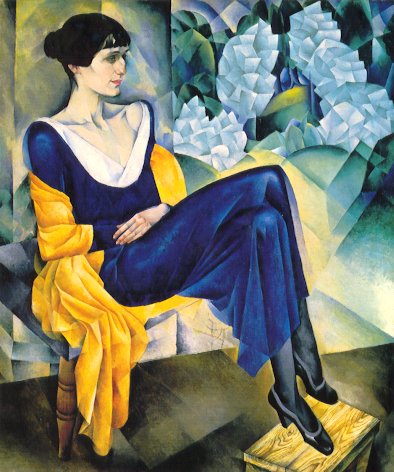
Anna Akhmatova: Forty-Five Poems Including ‘Requiem’
Reading Hamlet
To the right, wasteland by the cemetery
beyond it the river’s dull blue.
beyond it the river’s dull blue.
You said: ‘Go, get thee, to a nunnery
or get a fool to marry you…’
Though that’s always how Princes speak,
still, I’ve remembered the words.
As an ermine mantle let them stream,
behind him, through endless years.
‘Hands clasped under the dark veil.’
Hands clasped, under the dark veil.
‘Today, why are you so pale?’
– Because I’ve made him drink his fill
of sorrow’s bitter tale.
How could I forget? He staggered,
his mouth twisted with pain…
I ran down not touching the rail,
I ran all the way to the gate.
‘I was joking,’ I cried, breathlessly.
‘If you go away, I am dead.’
Smiling strangely, calmly,
‘Don’t stand in the wind,’ he said.
‘There’s a secret border in human closeness’
There’s a secret border in human closeness,
that love’s being, love’s passion, cannot pass –
though lips are sealed together in sacred silence,
though hearts break in two with love’s distress.
And friendship too is powerless, and years
of sublime flame-filled ecstasy
when the soul itself is free, fights clear,
of the slow languor of sensuality.
Those who try to reach that boundary are mad,
and those who have – are filled with anguish.
Now you know, now you understand,
why my heart won’t beat at your caress.

Lot’s Wife
The just man followed God’s messenger,
vast and bright against the black hill,
but care spoke in the woman’s ear:
‘There’s time, you can look back still,
at Sodom
you were born,
the square where you sang, where you’d spin,
the high windows of your dark home,
where your children’s life entered in.
She looked, and was transfixed by pain,
uncertain whether she could still see,
her body had turned to translucent salt,
her quick feet rooted there, like a tree.
A loss, but who still mourns the breath
of one woman, or laments one wife?
Though my heart never can forget,
how, for one look, she gave up her life.
Note: The reference is to Lot
Epilogue (from Requiem 1940-1943)
I learned to know how faces fall apart,
how fear, beneath the eye-lids, seeks,
how strict the cutting blade, the art
that suffering etches in the cheeks.
How the black, the ash-blond hair,
in an instant turned to silver,
learned how submissive lips fared,
learned terror’s dry racking laughter.
Not only for myself I pray,
but for all who stood there, all,
in bitter cold, or burning July day,
beneath that red, blind prison wall.
The poem “Rekviem” (“Requiem”) is Anna Akhmatova’s best known work. It is a composition that is made up of several shorter poems, all reflecting the anguish of the Russian people during the years of persecution under Joseph Stalin. Akhmatova was hesitant to trust the poem to paper, so consequently, it was memorized by the poet and a few of her trusted friends. It was published in the 1960s, after Stalin’s death. While the poem refers to Stalin’s oppressive rule, it is important to remember that the poem was also written during a time of war. The other poems in this section were written at the bequest of the Soviet government to admonish the German’s siege of Leningrad and their invasion of the Soviet Union. Stalin asked for Akhmatova to write poems about the “Siege” in order for them to be shared with the nation via radio broadcast. Akhmatova was evacuated from the city in 1943, by the Soviet army, for her safety.
and about her: http://www.uvm.edu/~sgutman/Akhmatova.htm
Subscribe to:
Posts (Atom)